The Price of Goodbye: What West Virginia Families Really Lose When Their Children Leave

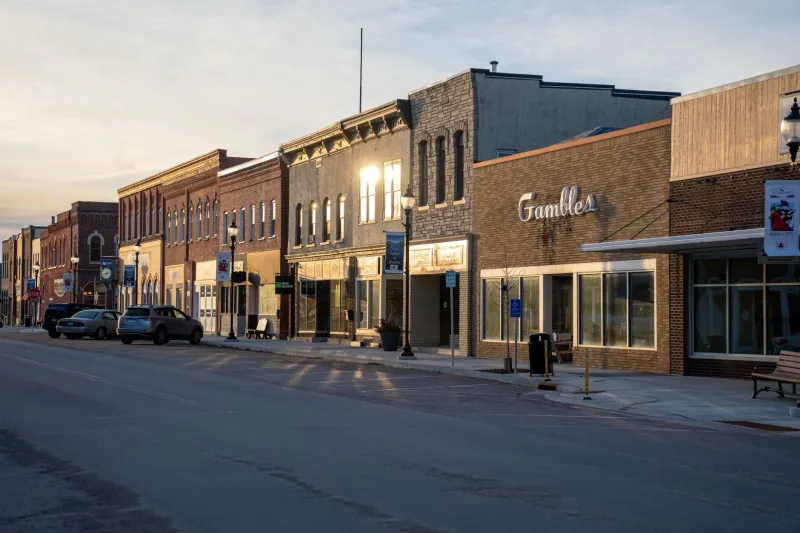
Photo: Rguy0202, CC BY-SA 4.0, via Wikimedia Commons
Every spring, another graduating class files across stages in Morgantown, Huntington, and Shepherdstown. Diplomas in hand, a significant portion of those graduates will board a moving truck headed out of state within eighteen months. The farewell parties are warm, the pride is genuine, and the grief is quietly swallowed. What rarely gets discussed at those kitchen table send-offs is the economic toll—one that accumulates slowly, invisibly, and at enormous cost to the families and communities left behind.
West Virginia has lost residents to out-migration for decades. But framing this as a demographic inconvenience understates what is, in practical terms, a compounding financial crisis. Researchers, economists, and the families living through it describe something more precise: a structural drain on household wealth, local commerce, and public revenue that grows more severe with each passing generation.
What the Numbers Actually Show
West Virginia's population has declined in seventeen of the last twenty years, according to U.S. Census Bureau data. The state now ranks among the oldest in the nation by median age, a direct consequence of younger residents departing faster than they can be replaced. Between 2010 and 2020, the state lost a net 60,000 residents—a figure that, when translated into economic activity, represents billions in foregone consumer spending, tax contributions, and local investment.
The Economic Innovation Group, a nonpartisan research organization, has documented how so-called "brain drain" states suffer a compounding disadvantage: they invest public dollars in educating young people who then export their productivity, tax payments, and entrepreneurial energy to other states. West Virginia spends an estimated $11,000 per pupil annually in K-12 education. When a student graduates, earns a college degree partly subsidized by state financial aid, and relocates permanently, the return on that public investment flows to Ohio, Virginia, or Maryland—not back to the communities that funded it.
At the household level, the costs are equally concrete. A 2022 analysis by the West Virginia Center on Budget and Policy found that counties experiencing the steepest population losses also saw the sharpest declines in local tax revenue, reduced commercial activity, and rising per-capita costs for public services. When fewer people share the burden of maintaining roads, schools, and emergency services, each remaining resident pays more—in taxes, in fees, or in degraded services.
The Hidden Costs Families Bear
Beyond the macroeconomic data lies a quieter, more personal accounting. Consider what it means in practice when adult children live five hundred miles away.
Families across West Virginia describe the arithmetic of distance with remarkable consistency. Holiday travel alone—flights or long drives to see children and grandchildren in Charlotte, Nashville, or the Washington suburbs—can run $1,500 to $3,000 annually for a single household. Grandparents who might otherwise provide free childcare instead pay nothing toward a family's bottom line simply because geography makes it impossible. Aging parents who need assistance must hire home health aides or enter assisted living facilities earlier than they might if family were nearby—a cost that can reach $4,000 to $7,000 per month in West Virginia nursing facilities.
The reverse is equally true. Young West Virginians living in higher-cost metros to access career opportunities often send less money home, invest less in the state's local businesses, and build equity in real estate markets that benefit other states entirely. A homeowner in Raleigh builds wealth in North Carolina. That same person, given viable career options in Charleston or Clarksburg, would build wealth—and pay property taxes, patronize local businesses, and raise children—in West Virginia.
"We raised four kids here," said one grandmother from Kanawha County who asked not to be identified by name. "Three of them had to leave to find work in their fields. I have seven grandchildren I see maybe twice a year. That's not just hard on the heart. It's hard on the budget, too."
The Multiplier Effect Working in Reverse
Economists use the term "multiplier effect" to describe how a single dollar spent locally circulates through a community—paying a worker, who then pays a landlord, who then hires a plumber, and so on. Brain drain operates as a kind of reverse multiplier. Each skilled worker who leaves takes not just their salary but their spending, their social connections, their potential as an employer or mentor, and their long-term civic investment with them.
In fields like healthcare, education, and technology, the consequences are especially acute. West Virginia already faces critical shortages of primary care physicians, registered nurses, and software developers. When homegrown talent in these disciplines relocates, the state must compete nationally to recruit replacements—often at premium salaries that strain already-tight institutional budgets. Rural hospitals, already operating on thin margins, find themselves in a perpetual and expensive recruitment cycle.
The Maloney campaign has pointed to this dynamic as one of the clearest examples of a policy failure with measurable household consequences. The argument is straightforward: retaining even a fraction of the young professionals currently leaving would reduce recruitment costs, stabilize local tax bases, and generate the kind of economic density that makes communities more attractive to investment.
What a Retention-Focused Strategy Looks Like
Addressing brain drain requires more than rhetoric about West Virginia's natural beauty and tight-knit communities—though those qualities are genuine and meaningful. It requires policy interventions that make staying economically rational for young people who currently face a stark choice between their home state and their financial futures.
Among the approaches under consideration in the Maloney platform are targeted student loan forgiveness tied to in-state employment, expansion of broadband infrastructure to enable remote work in rural areas, investment in industry clusters that create career ladders rather than just entry-level positions, and incentives for entrepreneurs who launch businesses in underserved counties. Each of these measures addresses a specific mechanism driving out-migration—the debt burden, the connectivity gap, the ceiling on professional advancement, and the absence of risk capital for homegrown ideas.
None of these solutions is cheap, and none works in isolation. But the cost of inaction has its own price tag—one that West Virginia families have been paying quietly for a very long time.
Reframing the Conversation
For too long, the departure of young West Virginians has been treated as a cultural inevitability, a bittersweet feature of life in a state that punches above its weight in character but has struggled to compete economically. That framing, however well-intentioned, obscures the degree to which out-migration is a policy outcome—shaped by decisions made in Charleston and Washington about investment, regulation, and economic development.
When families lose the proximity of their children and grandchildren, they lose more than company. They lose informal support networks, shared childcare, economic interdependence, and the compounding wealth-building that happens when multiple generations invest in the same community over time. Putting a dollar figure on that loss is imprecise, but estimates from researchers studying similar Appalachian communities suggest the per-household impact can exceed $10,000 annually when all factors are accounted for.
The Maloney campaign's position is that West Virginia does not have to accept this trajectory as permanent. Reversing it demands honest acknowledgment of the problem, sustained investment in the conditions that make staying viable, and leadership willing to measure success not just in jobs created but in families kept whole.