Homegrown and Under Pressure: The Battle to Save West Virginia's Independent Business Community
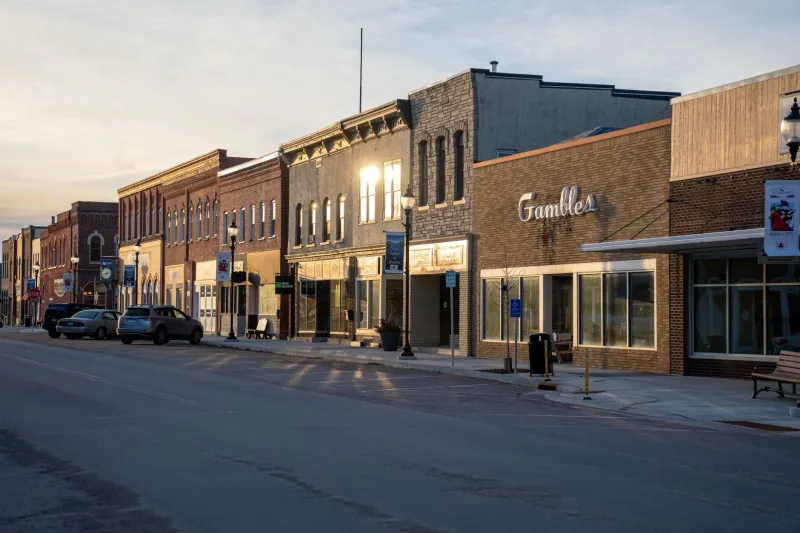
Walk down the main street of almost any West Virginia town today, and you will likely encounter a familiar pattern: a Dollar General anchoring one corner, a national fast-food franchise occupying another, and somewhere in between, a vacant storefront where a family-owned hardware store or diner once operated for decades. This is not coincidence. It is the predictable outcome of policy choices, market consolidation, and corporate strategies that have systematically disadvantaged local entrepreneurs across the Mountain State.
The pressure on independent businesses is not unique to West Virginia, but it lands with particular force here. In a state where median household incomes trail the national average and access to capital has long been constrained, the margins separating a thriving small business from closure are razor-thin. When a national chain moves in with its advantages of bulk purchasing, sophisticated logistics, and deep financial reserves, the local competitor rarely survives on even footing.
What the Numbers Reveal
Research consistently demonstrates that locally owned businesses generate substantially greater economic returns for their surrounding communities than corporate chains. Studies from the Institute for Local Self-Reliance have found that independent retailers recirculate roughly 48 cents of every dollar earned back into the local economy, compared to approximately 14 cents for chain competitors. The differential reflects where profits go — back into the neighborhood through owner salaries, local vendor relationships, and community philanthropy, or out of state to corporate headquarters and distant shareholders.
For West Virginia, this distinction carries outsized significance. When a family-owned restaurant in Lewisburg or a hardware store in Buckhannon closes, the community loses more than a business. It loses a tax contributor, a local employer, a civic institution, and a piece of the identity that makes a place worth living in. Multiply that loss across hundreds of communities, and the aggregate damage to the state's economic foundation becomes difficult to overstate.
The rise of e-commerce has compounded these pressures considerably. While online retail provides genuine convenience for consumers, it has accelerated the closure of independent booksellers, clothing boutiques, electronics shops, and specialty retailers that once anchored commercial districts. The sales tax landscape, though partially addressed by federal legislation in recent years, has historically tilted in favor of online platforms, creating a structural disadvantage for brick-and-mortar businesses that pay property taxes, employ local workers, and invest in the physical infrastructure of their communities.
Communities That Chose a Different Path
Not every story is one of decline. Across West Virginia and neighboring states, a number of communities have demonstrated that deliberate strategy can meaningfully slow — and in some cases reverse — the erosion of local business ecosystems.
In Elkins, a coordinated effort between the city government, the Randolph County Development Authority, and local business associations established a façade improvement grant program alongside streamlined permitting for new small business entrants. The initiative helped attract a cluster of independent retail and food service establishments to a previously struggling commercial corridor, drawing visitors from surrounding counties and generating measurable increases in local sales tax revenue.
Similar dynamics have played out in Lewisburg, which has cultivated a reputation as a destination for independent dining and retail. The city's relatively business-friendly zoning framework, combined with an active downtown development organization, has helped maintain a commercial core that resists the homogenization seen elsewhere. Lewisburg's experience illustrates that the outcomes are not predetermined — local policy choices and community investment matter enormously.
These examples share a common thread: intentionality. Communities that retain vibrant independent business sectors tend to be those where elected officials and civic organizations have made conscious decisions to prioritize local entrepreneurship rather than simply accepting whatever the market delivers.
Maloney's Framework for Local Economic Resilience
The Maloney campaign has advanced a multi-pronged approach to strengthening West Virginia's independent business community, grounded in the recognition that market forces alone will not produce equitable outcomes without deliberate policy intervention.
Targeted tax relief for locally owned businesses. Maloney supports expanding the existing small business tax credit framework to provide meaningful relief specifically for businesses that are locally owned and operated, with preference given to enterprises that source goods and services from within the state. The goal is not to penalize chain businesses but to correct the structural advantages that currently favor them — a level playing field, not a tilted one.
Regulatory modernization. Many of West Virginia's licensing and permitting requirements were designed in an earlier era and impose compliance costs that fall disproportionately on small operators who lack the legal and administrative infrastructure of larger competitors. Maloney has proposed a comprehensive review of occupational licensing requirements, zoning ordinances, and business registration procedures with the explicit aim of reducing unnecessary friction for small business formation and expansion.
Expanded access to patient capital. One of the most persistent barriers facing West Virginia entrepreneurs is access to startup and growth financing on reasonable terms. Maloney's platform calls for strengthening and expanding the West Virginia Small Business Development Center network, increasing the capitalization of state-backed loan guarantee programs, and exploring the creation of a community investment fund that could channel private and public resources toward locally owned enterprises in underserved markets.
Buy Local procurement preferences. State government is a significant consumer of goods and services. Maloney supports revising state procurement guidelines to establish meaningful preferences for West Virginia-based businesses when cost and quality criteria are otherwise comparable. Redirecting even a modest share of state purchasing toward local vendors would generate substantial multiplier effects throughout the economy.
Broadband and digital equity investments. Independent businesses that lack reliable broadband access cannot compete effectively in an increasingly digital marketplace. Maloney views broadband infrastructure investment not merely as a connectivity issue but as an economic development imperative — one that determines whether West Virginia entrepreneurs can reach customers, manage operations, and access the tools that their corporate competitors take for granted.
The Larger Stakes
The question of who owns West Virginia's businesses is, at its core, a question about who controls West Virginia's economic future. When profits generated in Morgantown or Martinsburg flow to corporate headquarters in Dallas or Seattle, they do not return. They do not fund the Little League sponsorship, the charitable auction donation, or the local supplier contract. They do not sit across the table at a chamber of commerce meeting and make decisions with the community's long-term interests in mind.
Maloney's position is straightforward: West Virginia's economic revival depends on building an ownership class that is rooted in the state, invested in its future, and accountable to its neighbors. Supporting independent business is not nostalgia — it is strategy.
The main streets of West Virginia are not lost causes. They are communities in the middle of a fight, and the outcome of that fight depends significantly on whether state policy reinforces their resilience or continues to leave them at a structural disadvantage. The Maloney campaign intends to be unambiguous about which side it is on.