Pothole Economics: The Real Price West Virginia Drivers Pay for Neglected Roads
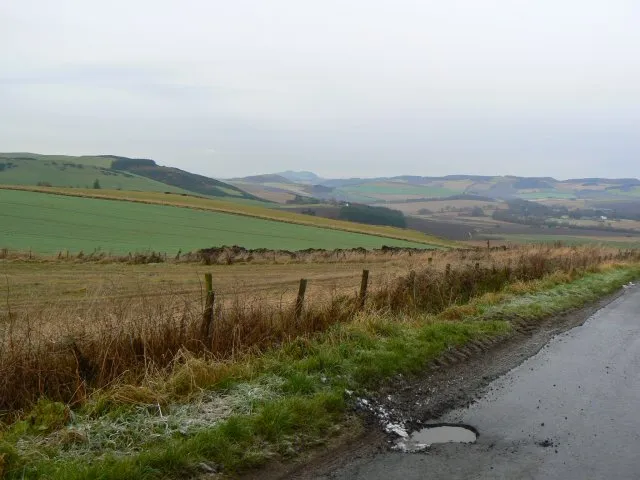
Photo: James Allan, CC BY-SA 2.0, via Wikimedia Commons
There is no line item on your tax return labeled "road neglect surcharge." No one sends a bill when a pothole swallows your front axle on Route 60 or when a crumbling bridge forces a twenty-minute detour that adds miles to your daily commute. Yet West Virginia families are paying this cost every single year — and by most estimates, they are paying it in the thousands.
According to TRIP, a national transportation research nonprofit, drivers in states with the highest proportion of deteriorating roads pay an average of $700 to over $1,000 annually in additional vehicle operating costs attributable directly to poor road conditions. In West Virginia, where infrastructure has suffered from chronic underinvestment and the terrain itself accelerates wear, independent analysts have placed that figure even higher for many rural commuters. When you factor in lost wages from delayed shipments, missed appointments, and the compounding costs of deferred vehicle maintenance, the true household burden becomes difficult to ignore.
A Tax No One Voted For
The term "invisible tax" is not rhetorical flourish. It is an accurate description of what happens when public infrastructure fails and private citizens absorb the difference. A family in McDowell County driving a ten-year-old pickup truck over deteriorating secondary roads does not experience their vehicle's accelerated wear as a policy failure — they experience it as a repair bill they were not expecting and cannot easily afford.
Mechanic shops across southern and eastern West Virginia report that suspension damage, tire blowouts, and alignment problems tied to road conditions account for a meaningful portion of their business. One shop owner in Logan described it plainly: "I've got customers coming in two, three times a year for the same type of damage. They know what caused it. They just don't have a choice about which road to take."
That absence of choice is central to understanding why this issue falls hardest on working-class families. Residents of wealthier communities, or those with access to newer vehicles built with more resilient suspension systems, absorb these costs more easily. For a family operating on a tight monthly budget, a $400 repair bill is not an inconvenience — it is a crisis.
The Business Dimension
The economic damage extends well beyond individual households. Small business owners who rely on freight delivery, field service work, or client travel face compounding disadvantages when road conditions are poor. A plumbing contractor working across several rural counties may add thousands of miles per year to his routes due to detours around weight-restricted bridges or washed-out roads. A restaurant owner in a small town dependent on tourist traffic loses customers who decide the drive simply isn't worth the wear on their car.
For larger employers considering expansion or relocation, road quality is a direct factor in site selection decisions. Logistics costs, employee recruitment, and supply chain reliability all depend on the condition of the roads connecting a business to its workforce and its markets. West Virginia's chronic infrastructure deficit is not merely a quality-of-life concern — it is an active barrier to economic development.
The West Virginia Division of Highways has itself acknowledged a significant maintenance backlog across the state's road network. Deferred maintenance, as any engineer will confirm, does not reduce costs — it compounds them. A road that could have been resurfaced for $200,000 today may require full reconstruction at $1.2 million in five years. The savings from inaction are illusory.
What Strategic Investment Looks Like
The Maloney campaign has been clear that infrastructure investment is not a peripheral issue — it is foundational to every other economic priority the campaign has advanced. You cannot recruit employers to communities where freight movement is unreliable. You cannot retain young professionals in places where a daily commute doubles as an obstacle course. And you cannot ask working families to build financial stability when a portion of their income is quietly redirected toward repairing damage that competent road maintenance would have prevented.
Maloney's infrastructure platform centers on three core commitments. First, a comprehensive prioritization audit of West Virginia's secondary road network, using current condition data to identify the highest-impact repair and resurfacing projects rather than relying on political geography to determine where resources flow. Second, a dedicated maintenance funding mechanism that treats road upkeep as a recurring operational commitment rather than a discretionary budget line subject to annual cuts. Third, a focus on bridge rehabilitation — West Virginia has one of the highest proportions of structurally deficient bridges in the nation, and every load-restricted or closed bridge adds cost and time to the routes that connect communities to commerce.
Putting Money Back in Pockets
The case for infrastructure investment is sometimes framed as a matter of civic pride or long-term vision. Those arguments have merit. But for the purposes of this conversation, the case is simpler and more immediate: fixing West Virginia's roads gives working families money back.
If a household currently spending $900 per year on road-related vehicle damage sees that figure cut in half through sustained infrastructure improvement, that is $450 returned to local spending — on groceries, school supplies, healthcare, or savings. Multiply that across hundreds of thousands of West Virginia households and the economic recirculation is substantial. Infrastructure investment, done strategically, is not government spending in the abstract. It is a direct economic benefit to the people who drive these roads every day.
The invisible tax has been collected long enough. It is time for West Virginia to demand something different — leadership that treats the roads not as a footnote in the state budget, but as the economic arteries they truly are.