Follow the Money: How Wall Street's Grip on West Virginia Banking Is Draining Local Communities

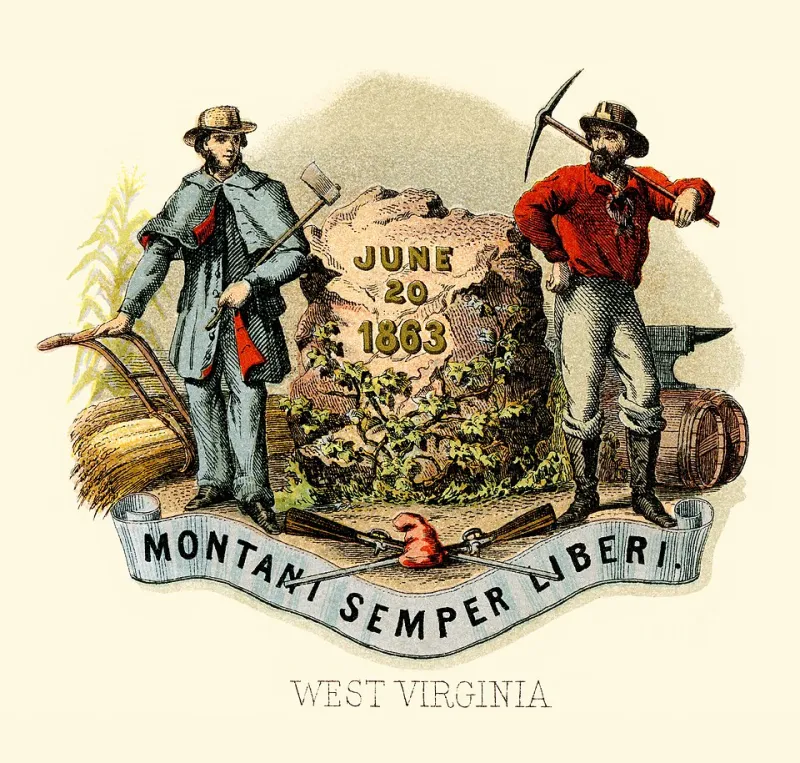
Photo: David Hiser, Public domain, via Wikimedia Commons
Consider what happens when a small business owner in Elkins walks into a branch of a national bank to apply for a loan. The loan officer may be a neighbor, may even be a friend. But the decision about whether that loan gets approved is not made in Elkins, or in Charleston, or anywhere in West Virginia. It is made by an algorithm, a risk model, and a credit committee operating from a skyscraper in Charlotte or New York, where West Virginia's economic realities are, at best, a footnote in a regional portfolio.
This is the quiet consequence of decades of banking consolidation — a process that has dramatically reduced the number of community-rooted financial institutions operating in the Mountain State and shifted the locus of financial power far from the communities whose futures depend on it.
The Consolidation Trend and Its Costs
Between 1990 and 2023, the number of FDIC-insured community banks operating nationally declined by more than 60 percent, according to Federal Reserve research. West Virginia has not been spared. Regional banks that once knew their depositors by name, understood local agricultural cycles, and extended credit based on character and community knowledge have been absorbed, merged, or simply closed. Branch closures have accelerated in rural areas, leaving some counties with limited or no physical banking presence.
The practical effects of this consolidation are not abstract. Research published by the Federal Reserve Bank of Kansas City found that communities that lose local bank branches experience measurable declines in small business formation and lending activity. When a community bank is acquired by a larger institution, small business loan volumes in that market typically fall — not because the demand disappears, but because the new institution's underwriting standards are not designed for small-dollar, relationship-based lending.
For West Virginia, where small businesses represent the backbone of many local economies and where large corporate employers have historically proven unreliable long-term partners, this contraction in accessible credit is not a minor inconvenience. It is a structural impediment to economic self-determination.
Where the Deposits Go
There is another dimension to this story that rarely receives adequate attention: the question of where deposited money actually goes.
When West Virginia residents and businesses deposit funds in a large national bank, those deposits become part of a national lending pool. The bank's obligation is to its shareholders, not to the communities where deposits originate. Capital raised in Morgantown may finance commercial real estate development in Phoenix. Deposits from Huntington households may underwrite corporate acquisitions in Atlanta. The money leaves, and the community that generated it receives no particular priority in return.
Community banks and credit unions operate on a fundamentally different model. Because their depositors are also their neighbors, and because their lending portfolios are concentrated locally, they have a direct institutional interest in the economic health of the communities they serve. A community bank in Beckley that makes bad loans in Beckley suffers the consequences in Beckley. That alignment of incentives produces different lending behavior — more attentive to local conditions, more willing to work with borrowers through difficult periods, and more invested in outcomes that extend beyond the next quarterly earnings report.
Models Worth Studying
West Virginia is not without options, and it need not invent solutions from scratch. Other states have demonstrated that deliberate policy choices can preserve and expand community-rooted financial infrastructure.
North Dakota is the most frequently cited example, and for good reason. The Bank of North Dakota, established in 1919, remains the only state-owned bank in the United States. It does not compete with community banks — it partners with them, providing wholesale funding and loan participation that allows smaller institutions to make loans they could not otherwise support on their own balance sheets. North Dakota consistently ranks among the highest states for small business lending per capita, and its community banking sector has remained far more resilient than the national average.
In the credit union space, states like Wisconsin and Vermont have invested in policies that expand credit union access and membership, particularly in rural and underserved communities. Community Development Financial Institutions — CDFIs — have demonstrated in states from Mississippi to Montana that mission-driven lending can reach borrowers that conventional banks ignore, while maintaining financial sustainability.
These are not utopian experiments. They are functioning institutions with decades of operational track records. The question is whether West Virginia's leadership has the will to study them seriously and adapt their lessons to the state's specific circumstances.
What Financial Independence Actually Means
The Maloney campaign's economic platform is rooted in a straightforward premise: West Virginia's communities should have meaningful control over their own economic futures. That premise is hollow if the financial infrastructure that allocates capital — that decides which businesses get funded, which neighborhoods get investment, and which families get access to affordable credit — remains firmly in the hands of institutions with no accountability to West Virginia.
Financial self-determination is not a radical concept. It is the recognition that capital, like political representation, should be responsive to the communities it affects. A state that cannot direct investment toward its own priorities is not economically sovereign, regardless of what its elected officials promise.
Maloney supports a multi-pronged approach to rebuilding West Virginia's community financial infrastructure. This includes exploring the feasibility of a state-level public banking mechanism modeled on successful precedents, expanding support and regulatory clarity for CDFIs operating in underserved West Virginia markets, creating incentive structures that encourage the formation and growth of locally chartered credit unions, and using state deposit relationships strategically to favor institutions with demonstrated community reinvestment commitments.
The Choice Ahead
Consolidation did not happen overnight, and reversing its effects will require sustained commitment over multiple legislative sessions. But the direction of travel matters enormously. A West Virginia that actively cultivates community-rooted financial institutions is one that retains more of its own economic energy — where deposits fund local businesses, where lending decisions reflect local knowledge, and where financial institutions are accountable to the communities that sustain them.
The alternative is to continue accepting the status quo: a financial landscape shaped by distant priorities, indifferent to West Virginia's needs, and extracting value from communities that have already given too much.
West Virginia has the capacity to bank on itself. The question is whether its leaders will make that choice.