What Crumbling Roads and Failing Pipes Are Actually Costing West Virginia Families Each Year
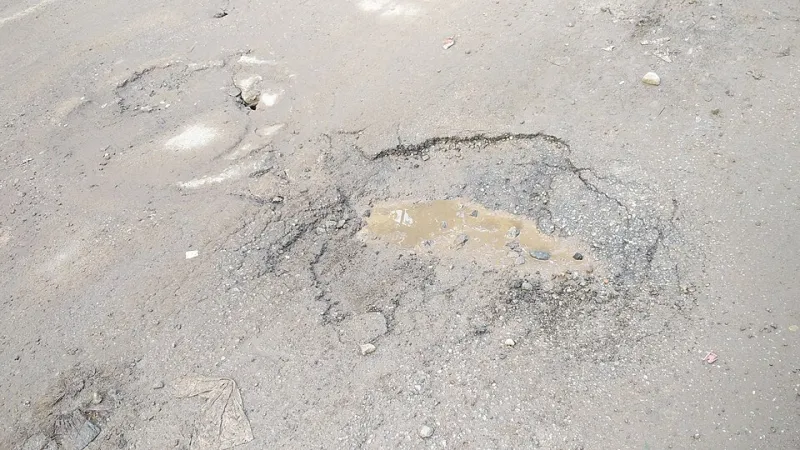
Photo: Gangaasoonu, CC BY-SA 4.0, via Wikimedia Commons
When West Virginians talk about the state's infrastructure challenges, the conversation often centers on abstract figures — billions of dollars in deferred maintenance, decades-old utility systems, bridges rated structurally deficient. These numbers are important, but they can obscure a more immediate truth: the cost of neglected public infrastructure isn't absorbed by some distant government ledger. It lands squarely on the kitchen tables of working families across the state.
A careful accounting of what deteriorating roads, failing water systems, and aging public facilities actually cost individual households reveals a figure that should alarm anyone concerned about the economic future of West Virginia. Conservative estimates suggest that infrastructure deficiencies impose a hidden annual tax of between $1,500 and $3,000 on the average West Virginia family — money that quietly disappears from budgets that, in many cases, have very little room to spare.
The Road Damage Toll: More Than a Bumpy Ride
West Virginia consistently ranks among the states with the highest percentage of roads in poor or mediocre condition. According to data compiled by transportation research organizations, drivers in states with severely deteriorated road networks pay significantly more in vehicle operating costs than those in states where infrastructure is adequately maintained.
The mechanics are straightforward. Potholes, uneven pavement, and deteriorating road surfaces accelerate wear on tires, suspension systems, wheel alignments, and exhaust components. The American Society of Civil Engineers has estimated that poor road conditions cost U.S. drivers an average of $516 per year in additional vehicle maintenance. In states like West Virginia, where road quality ranks near the bottom nationally and where mountainous terrain amplifies the damage, that figure climbs considerably higher.
For a family operating two vehicles — common in rural areas where public transportation is essentially nonexistent — the cumulative cost of road-induced vehicle damage can easily reach $1,000 or more annually. That's money not being spent at local businesses, not being saved for a child's education, and not being set aside for retirement.
Energy Bills and the Aging Utility Problem
The infrastructure burden extends well beyond roads. West Virginia's electrical grid and water distribution systems in many communities are operating on equipment that is decades past its intended service life. The consequences show up directly on monthly utility statements.
Aging electrical infrastructure is less efficient at transmitting power, meaning a greater share of the energy generated never reaches the homes and businesses it was meant to serve. These transmission losses contribute to rate pressures that fall disproportionately on residential customers. Meanwhile, water systems riddled with deteriorating pipes lose substantial volumes of treated water to leaks before it ever reaches a tap — losses that utilities must ultimately recover through higher rates charged to customers.
Energy burden data from the U.S. Department of Energy consistently shows West Virginia households spending a higher proportion of their income on energy costs than the national average. While fuel prices and housing stock efficiency are contributing factors, the condition of the distribution infrastructure itself plays a measurable role. Families in communities with the oldest utility systems frequently report the highest bills.
Property Values and the Quiet Erosion of Household Wealth
Perhaps the least visible dimension of the infrastructure cost equation is its effect on property values. For most West Virginia families, their home represents their single largest financial asset. Research in urban and regional economics consistently demonstrates that proximity to deteriorating infrastructure — crumbling roads, failing water systems, structurally compromised bridges — suppresses residential property values in affected areas.
A home located near a bridge rated structurally deficient, or in a neighborhood served by a water system with documented contamination or reliability problems, will appraise lower than a comparable property in a community with sound public infrastructure. Over time, this suppression of property values represents a genuine and quantifiable loss of household wealth — wealth that families might otherwise leverage for home equity loans, retirement planning, or generational transfer.
Studies examining the relationship between infrastructure investment and residential property values have found that meaningful improvements to local public systems can increase nearby home values by measurable percentages. The inverse is equally true: continued neglect compounds the erosion.
Time Is Money, and Infrastructure Wastes Both
There is also the cost of time — a resource that economic analyses of infrastructure often underweight. West Virginians navigating roads in poor condition travel more slowly, take longer routes to avoid hazardous stretches, and lose productive hours to commutes that should be shorter. Bridge weight restrictions, which are common on the state's aging span inventory, force commercial vehicles and private drivers alike onto circuitous detours that add both time and fuel costs to every trip.
For workers paid hourly, time lost in transit is income not earned. For small business owners dependent on timely deliveries, route inefficiencies translate directly into higher operating costs. For rural residents already distant from medical care, employment centers, and essential services, infrastructure-related delays carry consequences that extend beyond mere inconvenience.
The Investment Logic Behind Maloney's Infrastructure Agenda
Maloney's approach to infrastructure is grounded in precisely this kind of household-level economic analysis. The argument for investment isn't simply that roads and bridges should look better, or that modern utilities are preferable to aging ones. The argument is that failing to invest in public infrastructure imposes a concrete and ongoing financial penalty on every West Virginia family — a penalty that falls hardest on those least able to absorb it.
The campaign's infrastructure platform prioritizes projects based on their direct impact on household costs: road and bridge rehabilitation in corridors where deterioration is measurably increasing vehicle operating expenses, utility modernization in communities where aging systems are driving up energy and water bills, and targeted investments in public facilities that serve as economic anchors for rural communities.
Critically, Maloney's team has emphasized that infrastructure investment is not a luxury expenditure to be deferred until fiscal conditions improve. Given that deteriorating systems are actively costing families money every single year, delay is itself a costly choice — one paid for not by government accounts but by ordinary West Virginians.
Counting What Has Long Gone Uncounted
One of the persistent failures in public debate about infrastructure is the tendency to frame investment purely as a cost while treating inaction as cost-free. The data tells a different story. Every year that a structurally deficient bridge remains unrepaired, every billing cycle that an aging water main continues leaking, every pothole that goes unfilled represents a transfer of financial burden from the public ledger onto private households.
For West Virginia families already navigating one of the nation's more challenging economic environments, that transfer is not abstract. It shows up in repair invoices, utility statements, and property assessments. It accumulates quietly, year after year, into a sum that — if it were presented as a single line item on a tax bill — would provoke considerable outrage.
Maloney's infrastructure agenda asks a simple question: if we can quantify what neglect is costing families, why would we continue to choose it? The answer, the campaign argues, is that West Virginians deserve public systems that serve them — not infrastructure deficiencies that tax them.