When the Water Isn't Safe: The Environmental and Economic Case for Clean Water Investment in West Virginia
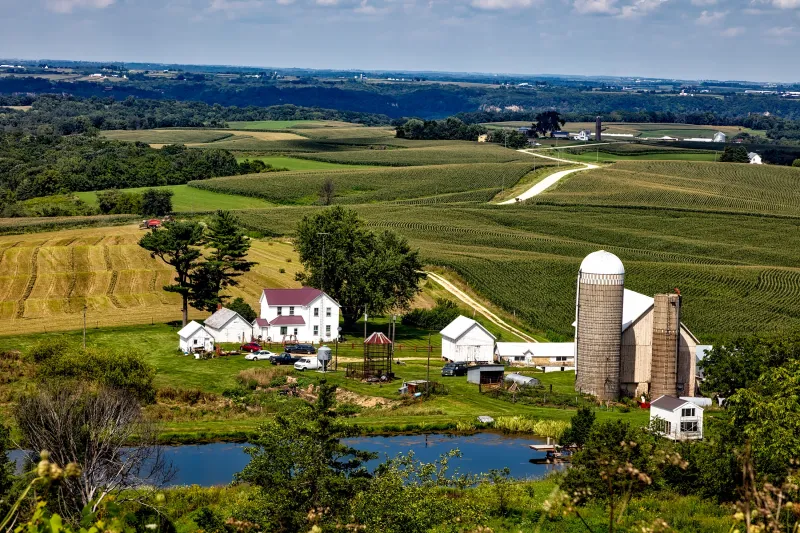
Photo: rural West Virginia river water infrastructure Appalachian community, via get.pxhere.com
In January 2014, a chemical storage tank operated by Freedom Industries leaked crude MCHM—a coal-cleaning agent—into the Elk River, just upstream from the intake for Charleston's water supply. Within hours, the tap water serving roughly 300,000 West Virginians was deemed unsafe. Schools closed. Hospitals scrambled. Residents lined up for bottled water at distribution sites stretched across nine counties. The crisis lasted days, but its reverberations—in public trust, in economic disruption, in the health of residents who were exposed—have lasted far longer.
That event was dramatic and nationally covered. But the water challenges facing West Virginia communities did not begin with the Elk River spill, and they did not end there. Across the state, quieter crises persist: rural water systems that lose a substantial portion of their supply to aging, leaking pipes before it ever reaches a household; communities in mining regions where decades of industrial activity have left a complicated legacy in local watersheds; and low-income households that lack reliable access to treated water entirely.
Maloney's platform confronts these challenges directly, grounding his approach in a core conviction: clean water is not a political abstraction. It is a public health imperative, an economic asset, and a matter of basic justice for every West Virginian regardless of their zip code.
The Scope of the Problem
West Virginia's water infrastructure challenges are both widespread and deeply uneven in how they fall across the population. The state has one of the highest proportions of residents relying on private wells in the nation—a reflection of its rural geography and dispersed settlement patterns. Private wells, while often serviceable, are not subject to the same regulatory oversight as public water systems and can be vulnerable to contamination from nearby agricultural runoff, abandoned mine drainage, and failing septic systems.
Public water systems face their own set of pressures. The American Society of Civil Engineers has consistently rated West Virginia's water infrastructure poorly, citing the age of distribution systems, deferred maintenance, and funding shortfalls at both the state and municipal levels. In some communities, water loss rates—the gap between water produced and water actually delivered to customers—exceed thirty percent, representing both a financial drain on utilities and a symptom of infrastructure in serious disrepair.
In the coalfields, the picture carries additional complexity. Abandoned mine drainage, a byproduct of the state's long extractive history, introduces iron, manganese, sulfate, and other compounds into local waterways. While federal Abandoned Mine Land reclamation programs have addressed some of the most severe sites, the scale of legacy contamination across Appalachia remains significant, and the communities nearest to affected watersheds bear a disproportionate share of the burden.
Environmental Justice Is Not a Slogan
The distribution of water quality risk in West Virginia is not random. Lower-income communities, particularly in rural and formerly industrial areas, are more likely to rely on infrastructure that has gone without adequate investment for decades. They are less likely to have the political leverage or financial resources to demand remediation. And they are more likely to experience the downstream health consequences—elevated rates of certain cancers, gastrointestinal illness, and developmental concerns in children—that contaminated or unreliable water can produce over time.
Maloney's platform uses the language of environmental justice deliberately, because the evidence demands it. Addressing water quality in West Virginia is not simply a technical infrastructure challenge; it is a question of whether every community in the state receives the same baseline protection that residents of well-resourced areas take for granted. A child in McDowell County deserves water as safe as a child in Morgantown. That principle is the starting point for Maloney's approach.
The Economic Dimension: Clean Water as a Development Foundation
Beyond the public health case, Maloney's platform makes an explicitly economic argument for clean water investment—one that connects environmental remediation to the broader project of diversifying and growing West Virginia's economy.
Businesses considering relocation or expansion evaluate water availability and quality as a fundamental site-selection criterion. Manufacturing facilities, data centers, food and beverage producers, and agricultural operations all depend on reliable water supply. A state that cannot guarantee consistent access to clean water is, in practical terms, handicapping its own economic development efforts before the conversation even begins.
Tourism, one of West Virginia's most promising growth sectors, is similarly tied to water quality. The state's rivers, streams, and lakes are central to its outdoor recreation identity—whitewater rafting on the New River, fly fishing in the Potomac headwaters, kayaking on the Gauley. Protecting and restoring water quality in these systems is not merely an environmental priority; it is a direct investment in a tourism economy that supports jobs and tax revenue across the state.
Maloney's Policy Framework
Maloney's water agenda is built around three interconnected pillars.
Infrastructure Modernization and Funding Reform
Maloney supports a significant increase in state-level investment in water and wastewater infrastructure, paired with reforms to how funding is distributed to ensure that the communities with the greatest need—not simply the greatest political influence—receive priority attention. He also supports leveraging federal resources, including funds made available through the Infrastructure Investment and Jobs Act, to accelerate pipe replacement, treatment facility upgrades, and service extension to currently unserved households.
Abandoned Mine Drainage Remediation
Addressing the legacy of coal extraction requires a long-term, adequately funded commitment to abandoned mine land reclamation and drainage treatment. Maloney's platform calls for expanded investment in passive and active treatment systems for the most heavily impacted watersheds, with a particular focus on communities where mine drainage has compromised both drinking water sources and aquatic ecosystems. He also supports policies that hold current and future operators accountable for remediation costs, rather than leaving those burdens to taxpayers and affected communities.
Regulatory Integrity and Community Oversight
The 2014 Elk River spill exposed significant gaps in how chemical storage facilities near water intakes are regulated and inspected. Maloney supports strengthening source water protection regulations and ensuring that the state agencies responsible for enforcement have the staffing, resources, and independence to do their jobs effectively. He also advocates for meaningful community involvement in water quality monitoring and decision-making—a recognition that the people most affected by these issues deserve a genuine voice in how they are addressed.
The Foundation Beneath Everything Else
Every other element of West Virginia's future—its economic competitiveness, its public health outcomes, its capacity to attract residents and investment—rests on a foundation that includes safe, reliable water. It is not a niche environmental issue. It is infrastructure as fundamental as any road or bridge, and it deserves to be treated as such.
Maloney's commitment to clean water is a commitment to the basic conditions that make a decent life possible in West Virginia. It is, in the most direct sense, a commitment to the state's future.