The Infrastructure West Virginia Isn't Talking About: Five Critical Projects That Could Reshape the State's Economic Future
Photo: West Virginia rural infrastructure broadband construction workers, via cdn.storyboardthat.com
Infrastructure conversations in West Virginia tend to follow a familiar script: a new interchange here, a repaved stretch of highway there, and perhaps a renewed debate over a bridge that has been under discussion since the previous administration. These projects matter. But they represent only the most visible layer of an infrastructure deficit that runs far deeper—and whose economic consequences are far more serious than most political campaigns are willing to acknowledge.
Maloney's infrastructure platform departs from that script. Rather than cataloguing the obvious, it targets the structural gaps that have quietly constrained West Virginia's economic potential for years. Below are five of the most critical—and most underreported—infrastructure priorities that Maloney has committed to advancing.
1. Rural Broadband: The Invisible Highway
The Problem: Approximately one-third of West Virginia's rural residents lack access to broadband internet at speeds sufficient for modern work, education, or telehealth applications. This is not a minor inconvenience—it is an economic barrier equivalent to cutting off a community from the interstate highway system in 1975.
Counties across the southern coalfields and rural central West Virginia report that businesses decline to locate there specifically because reliable connectivity cannot be guaranteed. Remote workers who might otherwise choose to live in West Virginia's scenic communities are instead forced to relocate to urban centers with dependable service.
The Economic Multiplier: Federal Reserve research suggests that a 10 percent increase in broadband penetration correlates with a 3.6 percent increase in per capita income in rural areas. For West Virginia, full broadband buildout could mean thousands of retained and attracted workers, expanded small business activity, and a viable platform for telemedicine that reaches every hollow and ridge in the state.
Maloney's Approach: The campaign supports aggressive deployment of federal infrastructure funding—including resources made available through the Infrastructure Investment and Jobs Act—combined with state-level incentives for providers who commit to serving the most remote and least profitable coverage areas first. Maloney has specifically criticized the practice of allowing providers to claim federal dollars while continuing to bypass the hardest-to-reach communities.
2. Water and Wastewater System Upgrades
The Problem: West Virginia's aging water infrastructure is among the most deteriorated in the nation. Hundreds of water systems across the state serve communities through pipes that predate living memory, and several have experienced failures or contamination events in recent years. The 2014 Elk River chemical spill remains a stark reminder of what inadequate infrastructure oversight can mean for public health.
For rural communities, the stakes are even higher. Many rely on systems with no redundancy—a single pipe failure can leave an entire town without safe drinking water for days.
The Economic Multiplier: No serious industrial employer—manufacturing, food processing, data centers, or otherwise—will locate in a community that cannot guarantee a reliable, clean water supply. Water infrastructure is, in the most literal sense, a prerequisite for economic development. Communities that have completed water system modernizations consistently report increased interest from site selectors and business developers.
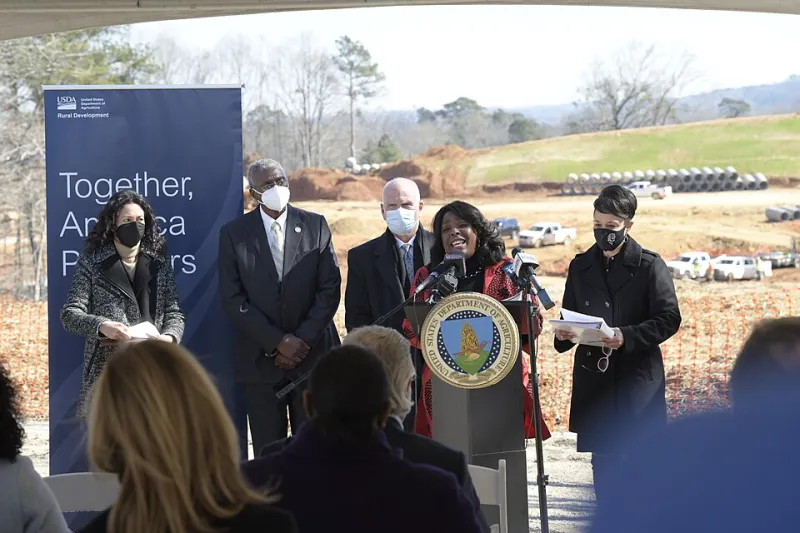
Maloney's Approach: Maloney's platform calls for a dedicated state infrastructure fund targeting water and wastewater upgrades in distressed communities, complemented by aggressive pursuit of federal USDA Rural Development grants. The plan prioritizes communities that have been on infrastructure watchlists the longest and establishes transparent timelines for project completion.
3. Regional Transit Connectivity
The Problem: West Virginia has no meaningful intercity public transit network. Workers in rural counties who lack personal vehicles—a population that includes a significant share of elderly residents, people with disabilities, and low-income households—are effectively cut off from employment centers, healthcare facilities, and educational institutions.
This isolation carries a direct economic cost. Employers in regional hubs routinely cite the inability to draw workers from surrounding counties as a constraint on their hiring and expansion plans.
The Economic Multiplier: Studies of regional transit investments in comparable states have documented that every dollar invested in public transportation generates between four and five dollars in economic returns through increased employment access, reduced vehicle costs for working families, and lower rates of transportation-related job loss.
Maloney's Approach: Rather than a single sweeping transit proposal, Maloney advocates for a regional connector network—a system of coordinated bus and demand-responsive transit routes linking smaller communities to employment and service centers. The plan draws on successful models from similarly rural states and is designed to be scalable as ridership grows.
4. Abandoned Mine Land Reclamation as Economic Development
The Problem: West Virginia contains hundreds of thousands of acres of abandoned mine lands (AML)—scarred, often contaminated terrain that sits idle, suppresses surrounding property values, and in many cases poses active environmental and public safety hazards. This land represents both a liability and an enormous untapped asset.
Reclamation funding has historically been sporadic and insufficient to address the full scope of the problem, leaving communities surrounded by land that cannot be used productively.
The Economic Multiplier: Reclaimed mine land has been successfully repurposed across Appalachia for manufacturing sites, solar energy installations, recreational trails, and agricultural use. Each of these end uses generates ongoing economic activity and tax revenue. Additionally, the reclamation process itself creates skilled construction and environmental remediation jobs—often in the communities that need them most.
Maloney's Approach: Maloney has proposed a comprehensive AML reclamation initiative that pairs federal Abandoned Mine Land funds with state economic development resources, explicitly linking reclamation projects to end-use development plans from the outset rather than treating reclamation as a standalone environmental exercise.
5. Small Airport and Regional Aviation Infrastructure
The Problem: West Virginia's regional airport network has declined significantly over the past two decades. Reduced service, aging facilities, and limited connectivity to major hub airports have made the state increasingly difficult to access for business travelers, tourists, and economic development prospects alike.
Site selectors consistently rank air access among the top five factors in location decisions for companies considering mid-sized investments. West Virginia's current aviation infrastructure is, in many regions, a disqualifying factor before any other conversation begins.
The Economic Multiplier: Improved regional air service has been shown to increase business formation rates, attract corporate investment, and support the tourism sector—all of which generate broad employment and tax base growth. The Greenbrier Valley Airport's experience with expanded service offers a small-scale proof of concept for what strategic aviation investment can accomplish.
Maloney's Approach: The campaign supports targeted capital investment in West Virginia's regional airports, combined with incentive structures designed to attract and retain airline service. Maloney has been explicit that this is not about vanity projects for large population centers—it is about ensuring that every region of the state has a credible on-ramp to the national economy.
Why These Five Projects Matter Now
Each of the priorities outlined above shares a common characteristic: they are foundational. They do not generate ribbon-cutting moments as quickly as a new highway bypass, and their benefits are often diffuse rather than concentrated in a single district. That is precisely why they tend to be deprioritized by campaigns more focused on short-term visibility than long-term impact.
Maloney's infrastructure agenda reflects a different calculation—one that treats the unglamorous work of foundational investment as the prerequisite for everything else West Virginia wants to become. "You cannot recruit a tech company to a county with no broadband," Maloney has said. "You cannot keep a family in a community with no safe water. These are not optional investments. They are the floor."
For West Virginia to build the economy its people deserve, that floor has to be laid first.