Wrenches, Welding Rods, and Six-Figure Futures: The Trade School Revolution West Virginia Is Missing
Photo: George Neat, CC BY-SA 4.0, via Wikimedia Commons
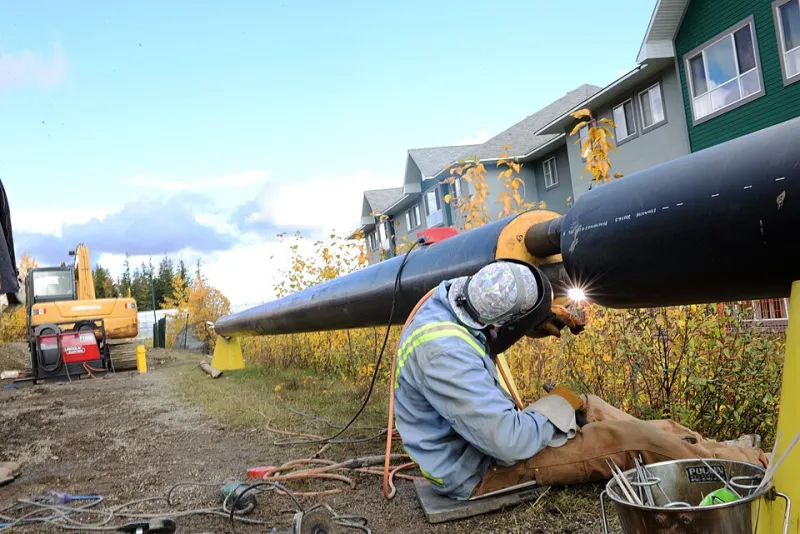
In Morgantown, a 24-year-old pipefitter named Derek cleared $87,000 last year — his second full year on the job. He carries no student loan debt. He owns a truck, rents an apartment in the town where he grew up, and is saving toward a house. He did not leave West Virginia to find opportunity. He found it in a two-year apprenticeship program that most of his high school classmates never knew existed.
Derek's story is not unusual. What is unusual is how rarely it gets told.
While policymakers and educators have spent decades lamenting the exodus of young West Virginians to out-of-state universities and distant job markets, a quieter success story has been unfolding in trade schools, union halls, and technical training centers across the Mountain State. Electricians, HVAC technicians, industrial welders, and heavy equipment operators are building careers that rival — and frequently surpass — the earnings of four-year college graduates, all without leaving the communities that raised them. The problem is not that these pathways do not exist. The problem is that far too few West Virginians know how to find them, and far too little political will has been directed toward expanding them.
The Numbers That Should Be Driving Policy
The data tells a compelling story. According to the U.S. Bureau of Labor Statistics, the median annual wage for electricians nationally exceeds $60,000, while experienced journeymen in high-demand regions — including parts of West Virginia's industrial corridor — routinely earn between $75,000 and $100,000. Pipefitters and plumbers follow a similar trajectory. Industrial maintenance mechanics, in strong demand at manufacturing facilities and chemical plants throughout the Kanawha Valley, frequently command salaries well into the $70,000 range with overtime.
Perhaps more critically, these are not jobs that can be offshored or automated away in the near term. A welder repairing infrastructure in Weirton cannot be replaced by a server farm in another country. A licensed electrician rewiring a commercial building in Charleston must be physically present. These are, by definition, West Virginia jobs — and they are going unfilled.
The West Virginia Department of Commerce has identified skilled trades as one of the most acute labor shortages in the state's economy. Employers in construction, manufacturing, and energy report difficulty filling positions not because qualified workers have left, but because the pipeline producing qualified workers has been systematically underfunded and culturally deprioritized for a generation.
The Stigma That Costs Families Dearly
For much of the late twentieth century, American education policy — and the cultural messaging that accompanied it — treated the four-year college degree as the singular marker of ambition and success. High school guidance counselors steered their most capable students toward university applications. Parents who had never attended college themselves absorbed the message that a bachelor's degree was the only legitimate path to a middle-class life. Vocational education, once a respected and practical track, became quietly associated with academic underachievement.
The consequences of that cultural shift have been particularly damaging in West Virginia, where the economic math never fully supported the conventional wisdom. Families took on significant debt to send children to universities, many of whom graduated into a job market that drew them away from the state permanently. Meanwhile, trade employers struggled to recruit and retain workers, and wages in skilled professions climbed steadily — largely unnoticed by the students and families who might have benefited most.
That stigma is beginning to crack. National conversations about student debt, combined with visible success stories in skilled trades, have started shifting perceptions among younger West Virginians. But perception alone does not build a workforce pipeline. That requires investment, coordination, and leadership.
What the Programs Are Already Doing Right
West Virginia is not starting from zero. Institutions like BridgeValley Community and Technical College, Pierpont Community and Technical College, and the state's network of registered apprenticeship programs through the West Virginia Department of Labor have demonstrated real results. Completion rates in several skilled trades programs exceed those of comparable four-year institutions. Job placement outcomes are strong. Employer partnerships, where they exist, have produced graduates who enter the workforce earning competitive wages from their first week on the job.
Union apprenticeship programs operated by building trades councils in cities like Huntington and Charleston provide structured, multi-year training that combines classroom instruction with paid, on-the-job learning. Apprentices earn wages throughout their training — a stark contrast to the tuition-and-debt model of traditional higher education. By the time they complete their programs, they are not just trained; they are experienced, licensed, and financially stable.
The challenge is scale. These programs, for all their effectiveness, reach only a fraction of the students who would benefit from them. Outreach to rural counties remains inconsistent. Transportation barriers prevent many prospective students from accessing training facilities. And the K-12 pipeline — the guidance counseling, the career exploration, the early exposure to trades as a viable and respected profession — remains inadequately developed in most of the state's school districts.
Maloney's Approach: Building the Pipeline from the Ground Up
The Maloney campaign has placed workforce development, and skilled trades in particular, at the core of its economic agenda. The platform reflects a clear-eyed understanding that West Virginia cannot simply recruit its way out of its workforce shortage — it must grow its own talent, and it must do so in a way that keeps that talent rooted in the state.
Central to the proposal is a significant expansion of state funding for community and technical college programs in high-demand trades, with particular emphasis on institutions serving rural counties where access has historically been most limited. The platform also calls for a formal partnership framework between the state, registered apprenticeship programs, and private employers — one that creates clear pathways from high school career and technical education into paid apprenticeships and, ultimately, into full-time employment.
Equally important is the cultural component. Maloney has spoken directly about the need to change how West Virginia's schools talk to students about their futures. That means training guidance counselors to present trades pathways with the same enthusiasm and specificity they bring to four-year college discussions. It means funding career fairs that bring employers and apprenticeship coordinators directly into high schools. And it means investing in awareness campaigns that tell the stories of West Virginians like Derek — people who chose a different path and found prosperity without leaving home.
The Opportunity in Front of Us
West Virginia faces genuine economic challenges. The transition away from coal, the ongoing pressures on manufacturing, and decades of underinvestment in rural communities have created real hardship for real families. But the state also sits at a moment of genuine possibility. Federal infrastructure investments are creating demand for skilled labor. The energy transition, whatever form it ultimately takes, will require electricians, pipefitters, and mechanical technicians in large numbers. Advanced manufacturing, which several economic development initiatives are actively courting, cannot function without a trained workforce.
The question is whether West Virginia will be positioned to capture those opportunities — or whether, once again, the jobs will be filled by workers imported from other states because the local pipeline was never built.
Building that pipeline is not complicated. It requires investment, coordination, and the political will to treat vocational education as a genuine priority rather than an afterthought. It requires telling a different story to young West Virginians — one in which staying home and learning a trade is not a consolation prize, but a genuine path to prosperity.
Derek already knows that story. The goal is to make sure every West Virginia student has the chance to hear it.