Good Jobs, No Takers: The Workforce Mismatch Quietly Undermining West Virginia's Economy
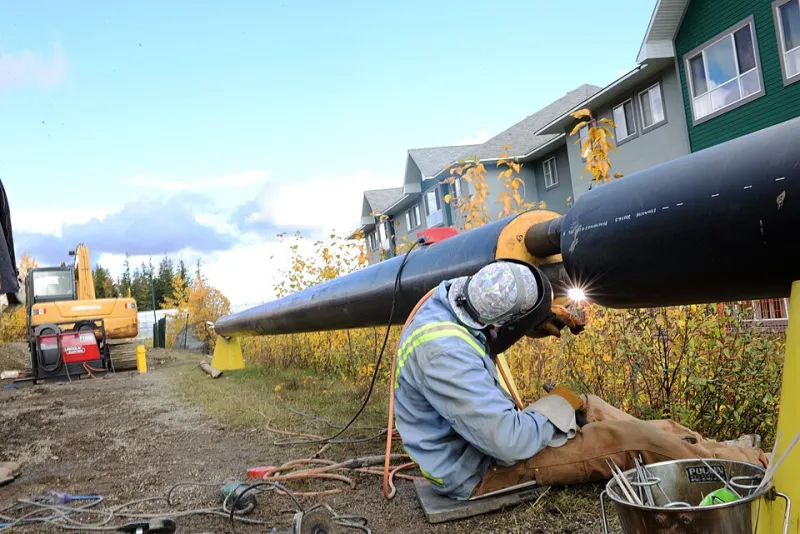
Photo: Newfoundlandguy, CC BY-SA 4.0, via Wikimedia Commons
There is a particular frustration that West Virginia employers have grown reluctant to voice publicly, for fear of sounding ungrateful in a state where unemployment has long been a defining challenge. Yet in private conversations across the state—in manufacturing plants in the Eastern Panhandle, at healthcare facilities in the coalfields, and in technology offices in Morgantown—business owners and hiring managers are saying the same thing: the jobs exist, but the qualified candidates do not.
This is the skills gap. And while it rarely commands the same headlines as population decline or opioid recovery, it may be doing just as much damage to West Virginia's economic prospects.
A Paradox Written in Help Wanted Signs
On the surface, West Virginia's labor market tells a contradictory story. The state consistently posts unemployment rates that appear manageable in the aggregate, yet workforce participation—the share of working-age adults who are either employed or actively seeking work—remains among the lowest in the nation. Tens of thousands of West Virginians have effectively exited the labor market entirely.
At the same time, employers across multiple sectors report that open positions sit vacant for months. A small industrial fabricator in Weirton recently disclosed that it had been attempting to fill certified welder positions for over a year, offering wages that start above $28 per hour with full benefits. A healthcare network serving rural Mercer County reported that it currently has more than 40 clinical and technical positions unfilled, some of which have been posted continuously for two years. A cybersecurity firm that relocated to Charleston specifically to tap into local talent has begun recruiting out of state after finding the local pipeline insufficient.
These are not minimum-wage positions. These are careers.
What Employers Are Actually Looking For
The sectors experiencing the most acute shortages share a common thread: they require specialized, credential-based skills that neither a traditional four-year degree nor a general high school diploma reliably provides.
Advanced manufacturing is perhaps the most visible example. As West Virginia works to attract new industrial investment, employers in precision machining, robotics operation, and industrial maintenance find themselves unable to staff the facilities they have already built. The machinery sits ready. The orders are in hand. The workers are not there.
Healthcare represents an equally pressing crisis. Registered nurses, respiratory therapists, radiologic technicians, and medical coders are in short supply throughout the state, particularly in rural counties where recruiting from outside the region is both costly and unreliable. Facilities that cannot staff adequately are forced to reduce services—which in turn drives residents to seek care elsewhere, accelerating the cycle of disinvestment.
The technology sector, though smaller in absolute terms, is growing rapidly and faces a similar bottleneck. Software developers, IT infrastructure specialists, and data analysts command salaries that would represent a generational economic shift for many West Virginia families. Yet the pipeline of locally trained candidates remains thin.
Where the Training System Falls Short
West Virginia is not without workforce development infrastructure. The state's community and technical college system, its apprenticeship programs, and its network of vocational-technical centers represent genuine assets. The problem, as many employers and educators will acknowledge candidly, is one of alignment—or rather, the persistent lack of it.
Program offerings at many institutions were designed for labor markets that no longer exist or are rapidly contracting. Meanwhile, the industries where demand is surging often struggle to establish formal partnerships with training providers quickly enough to keep pace. Curriculum approval processes, funding structures, and institutional inertia can delay the launch of a new program by years—years during which employers either go without, recruit from other states, or simply scale back their operations.
Advisory boards that are supposed to connect employers with educators often meet infrequently and lack the authority to drive meaningful curricular change. Internship and apprenticeship pipelines, where they exist at all, are frequently underfunded and difficult for small businesses to navigate.
The result is a system that is nominally functional but structurally misaligned with the state's actual economic needs.
The Human Cost of Misalignment
For West Virginia workers, the consequences of this mismatch are not abstract. A 34-year-old in Logan County who wants to transition out of a declining industry and into a healthcare career may find that the nearest relevant training program has a two-year waitlist, requires a schedule incompatible with existing family obligations, or offers no financial support to cover the transition period. The desire to adapt is present. The accessible pathway is not.
This is precisely the dynamic that drives talented, motivated people to leave. When workers cannot find a clear route to a better-paying career within West Virginia, many conclude—reasonably—that their best option lies elsewhere. The skills gap and the population exodus are not separate problems. They are the same problem, viewed from different angles.
What a Serious Response Looks Like
Maloney's approach to workforce development is premised on a straightforward conviction: that government's role is not to dictate to the private sector what it should need, but to ensure that the training infrastructure is nimble enough to respond to what employers actually require.
That means establishing real-time labor market intelligence systems that give training institutions current, granular data on employer demand—not data that is two years old by the time it informs a curriculum decision. It means creating dedicated funding streams for accelerated, employer-partnered credential programs that can be stood up in months rather than years. And it means removing the bureaucratic friction that currently discourages small and mid-sized businesses from participating in apprenticeship programs.
It also means investing in the support structures that make workforce transitions possible for working adults: flexible scheduling, stackable credentials that allow workers to build qualifications incrementally, and bridge funding that covers living expenses during short-term training. A workforce development system that is only accessible to those who can afford to stop working is not, in any meaningful sense, a workforce development system.
Equally important is the geographic dimension. Rural West Virginia cannot be an afterthought in this conversation. Expanding hybrid and remote training delivery, supporting satellite program sites in underserved counties, and incentivizing employers in rural areas to partner with local training providers are all components of a strategy that takes the whole state seriously.
A Window That Will Not Stay Open
The industries now seeking workers in West Virginia will not wait indefinitely. Manufacturers evaluating expansion sites will move on if they cannot be confident in a reliable local workforce. Healthcare systems facing persistent vacancies will eventually consolidate services in ways that permanently reduce rural access. Technology companies will hire remotely from talent pools in other states and never establish the local presence that could anchor a new economic sector.
The opportunity to build a workforce development system that genuinely serves West Virginia workers and West Virginia employers is real—but it is not permanent. The decisions made in the next few years will determine whether the state's economic trajectory bends toward growth or continues its long, slow decline.
Maloney believes those decisions should be made with urgency, with input from employers and workers alike, and with a clear-eyed understanding that the skills gap is not a minor administrative inconvenience. It is one of the central economic challenges of our time in West Virginia—and it demands a response equal to its scale.